Readiness brief
The decision, verified context, assumptions, open questions, risks, and near-term actions in one leader-ready view.
 Main Street HR Partners
Applied Workforce Strategy
Businesses need staffing, managers, skills, career paths, and workforce capacity. Communities need strong employers, education, housing, infrastructure, and aligned partners. Main Street connects both sides before pressure becomes expensive.
Work in Practice
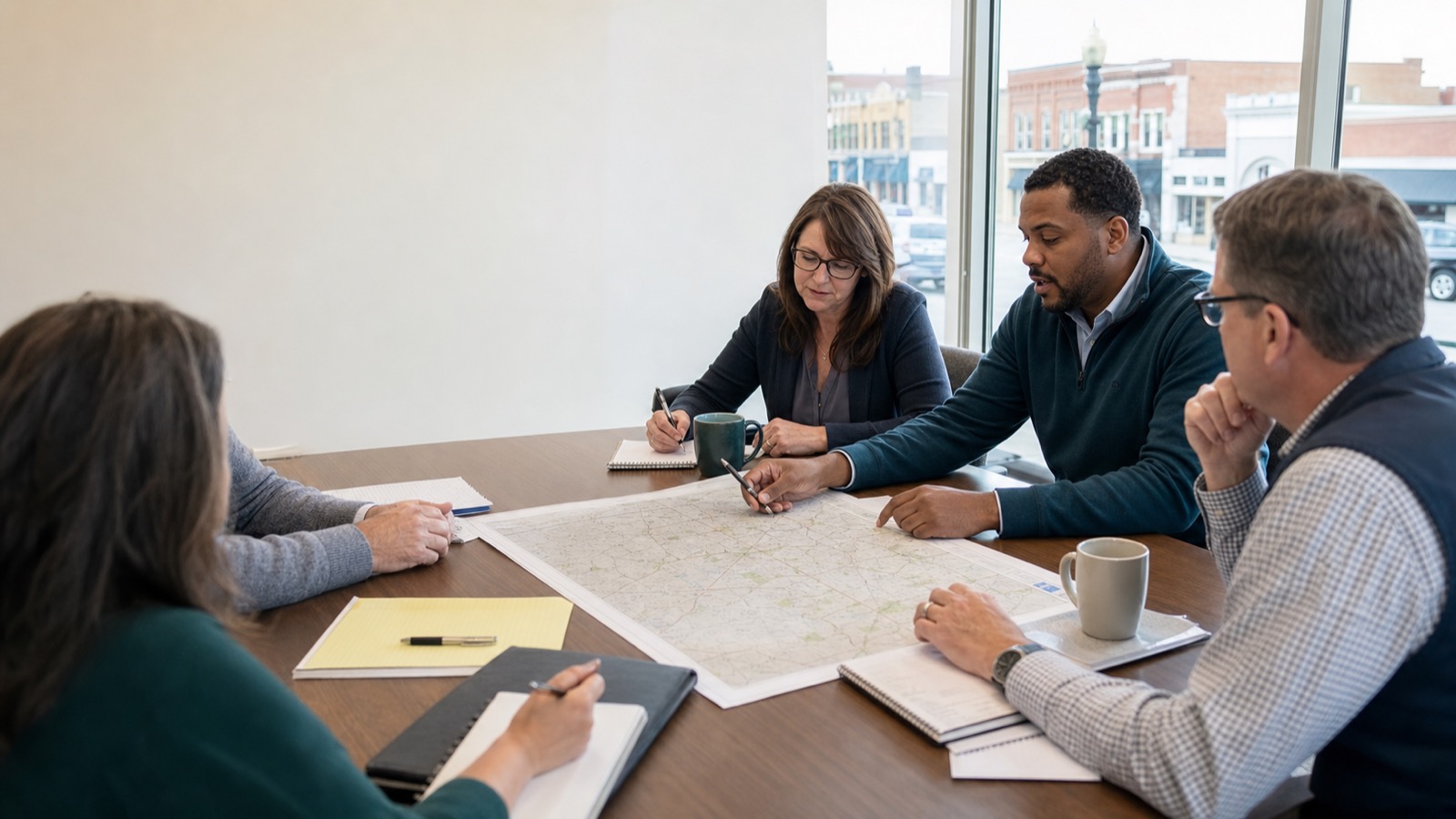
A recent regional planning effort began with a familiar problem: leaders could see significant workforce pressure coming, but the demand, existing capacity, employer effects, training options, and partner responsibilities had not yet been assembled into one credible view.
Main Street organized the work around a simple rule: use existing capacity first, validate the remaining gaps, and make larger commitments only when the evidence supports them.
The Readiness Model
The sequence is repeatable, but the answers are local. Each step is designed to produce a decision, not simply another collection of information.
Clarify what is changing, which decisions are actually on the table, and what is still unknown.
Test occupations, skills, timing, volume, credentials, and assumptions with the right sources.
Identify employers, training, education, apprenticeships, workforce programs, and community supports already in place.
Separate genuine missing capacity from coordination problems, information gaps, and resources that are simply underused.
Give employers, educators, workforce partners, and civic leaders specific roles and a practical sequence.
Measure action, participation, career movement, employer outcomes, and the capacity left in place over time.
What the Work Produces
The decision, verified context, assumptions, open questions, risks, and near-term actions in one leader-ready view.
The roles, skills, credentials, timing, and evidence required to understand future workforce pressure.
The employers, programs, educators, partners, and supports that can contribute before something new is built.
The people and organizations that need to act, why they matter, what to ask, and where their work connects.
The conversations, data, and decisions needed to test the strategy before commitments grow.
The owners, next moves, readiness, measures, and completed work that keep implementation visible.
Review a workforce strategy, employer-fit analysis, community profile, and decision brief with realistic recommendations and action plans.
Applied Work
These examples describe public-safe work products and methods. They do not identify a client, sponsor, employer, or active project.
Separate workforce demand into practical phases, test occupations and skills, map providers and employer effects, and identify the information that must be verified before commitments grow.
Compare towns through consistent workforce variables while preserving the local differences in households, commuting, employers, institutions, housing, and long-term goals that shape each strategy.
Connect workforce planning, hiring, onboarding, manager routines, performance, career movement, retention, and employee feedback so growth is supported inside the workplace.
Evidence Discipline
Supported by a reliable source or confirmed by an authorized stakeholder.
Useful for planning, clearly labeled, and still subject to validation.
A missing fact that could change the decision or the recommended sequence.
A choice made by the appropriate owner with the evidence and tradeoffs visible.
How Progress Is Measured
Training participation, credentials, placements, internal movement, retention, and wage progression.
Employer participation, hiring readiness, manager capability, workforce systems, and reduced disruption.
Partners aligned, pathways operating, local providers engaged, gaps closed, and useful capacity left in place.
Assumptions tested, risks surfaced, responsibilities assigned, and commitments matched to evidence.
This page shows Main Street's method and public-safe work products. It does not disclose restricted project information or imply endorsement, sponsorship, partnership, or approval by any organization. Active research, estimates, and working assumptions may change as facts are validated.
Apply the Model
A first conversation can clarify the decision, the evidence needed, and the fastest responsible way to begin.
This opens a new message in your email app.